
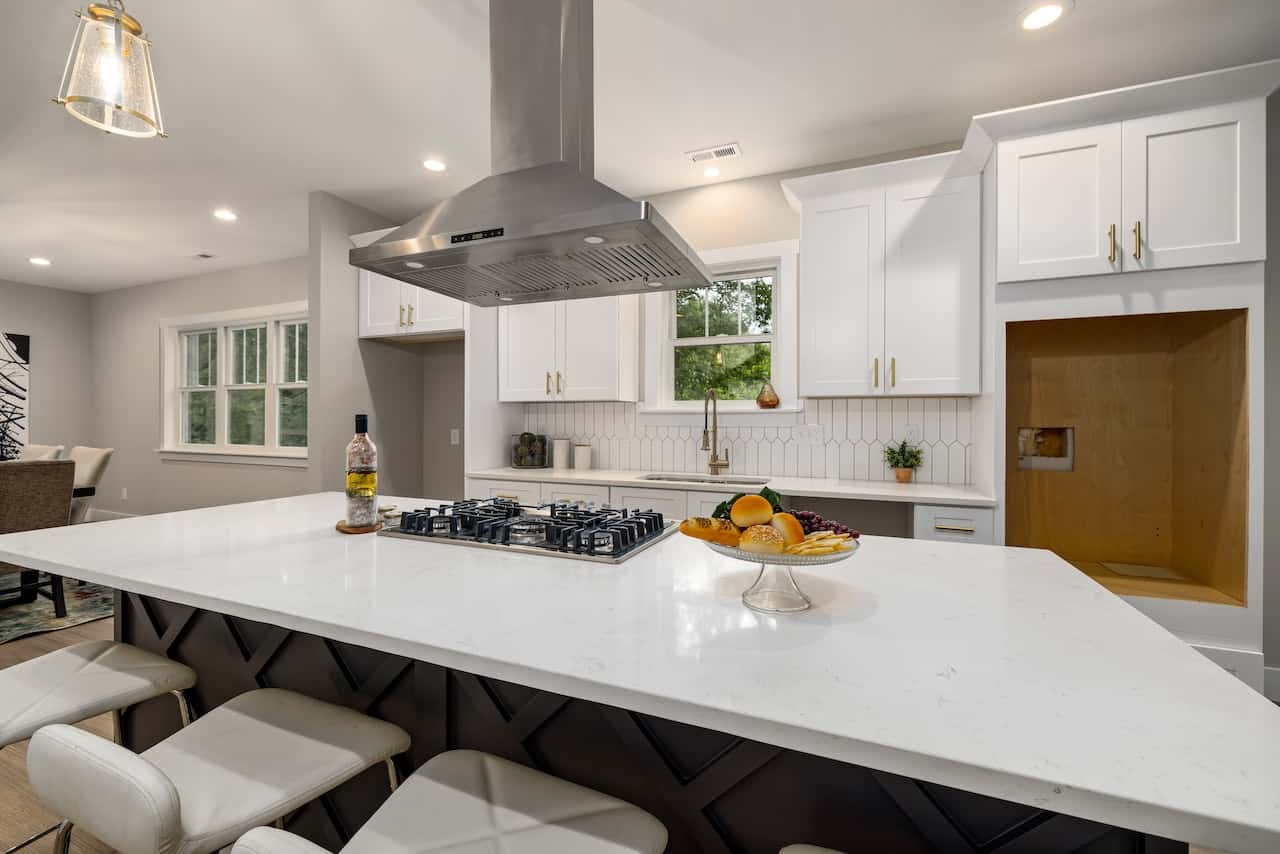
A kitchen chimney is an extremely essential device that keeps your cooking space smoke-free, fresh, and clean. With so many chimneys out there in the market, one of the most common issues that homeowners face is whether to install a ducted or ductless chimney. Both of them have pros and cons, thus selecting one among them is challenging. Here, in this guide, we will discuss the difference between ducted and ductless chimneys so that you will be able to choose the best chimney for kitchen usage to create a healthy and warm cooking environment.
Understanding Ducted Chimneys
A vented chimney or ducted chimney ventilates grease, smoke, and heat from the building through a duct or pipe. The ducted chimney is generally employed in commercial food establishments and heavy-cooking homes.
Benefits of Ducted Chimneys
- Ineffective Exhaustion of Smoke: A ducted chimney vents out smoke, smell, and grease, freshening your air in the kitchen and enhancing indoor air quality.
- Increased Suction Power: As these chimneys exhaust the air outdoors, they provide increased suction power, and hence they are best for deep frying and barbecuing.
- Less Maintenance: As there are fewer dependencies on filters, ducted chimneys require less maintenance and cleaning.
- Energy Efficient: They use less energy than ductless models since they do not have extra filters used to clean air.
- Prevents Heat Build-up: Heated air is vented outside with the help of ducted chimneys. It helps cool the kitchen, making cooking more comfortable.
Disadvantages of Ducted Chimneys
- Complexity of Installation: Needs proper outlet, which can require professional installation and additional modifications.
- Fewer Placement Options: Since ducting requires external venting, the location where a chimney may be installed is only available on walls close to an outside opening.
- More Initial Expense: The initial expense is higher for ductless ones because additional infrastructure requirements are involved.
- Must Be Regularly Cleaned: With time the ducting gets filled up with grease and dirt that demand frequent cleaning for proper functioning.
Learning About Ductless Chimneys
Ductless chimneys, or recirculating chimneys, do not involve the use of outside ducting. Instead, they employ strong filters that clean the air and circulate it back to the kitchen.
Benefits of Ductless Chimneys
- Flexibility of Installation: This can be installed anywhere within the kitchen without considering outside ducting.
- Slimness: Provides a slim and contemporary appearance, which improves the overall look of the kitchen.
- Less Upfront Cost: As no ductwork is involved, it is easy and cheap to install.
- Perfect for Apartments: Ideal for houses where it is not feasible to have external ducting.
- Efficiently Absorbs Grease & Odors: The high-quality carbon filters absorb grease and odors efficiently, keeping the cooking area hygienic.
Disadvantages of Ductless Chimneys
- Maintenance Daily: Mesh and carbon filters have to be cleaned and replaced on a daily basis for effective performance.
- Less Suction Power: Because air is being recirculated instead of being pushed out, these chimneys have less suction power than ducted ones.
- Poor Smoke Removal: Excessive grilling and frying cooking will lead to residual smoke and fumes in the kitchen.
- High Power Consumption: Because they use filters and recirculation, ductless chimneys consume more energy.
- Could Not Be Suitable for Larger Kitchens: For high-cooking larger kitchens, ductless chimneys might not be strong enough to clean air as required.
Ducted vs. Ductless Chimney: Which Do You Need?
The selection of the best chimney for kitchen depends on so many factors including cooking technology, kitchen size, and budget. Here is a brief guide to make it more clear:
| Feature | Ducted Chimney | Ductless Chimney |
| Removing Smoke | High | Moderate |
| Suction Power | Strong | Weaker |
| Installation | Complex | Easy |
| Maintenance | Low | Higher |
| Price | Higher Initial Cost | Lower Initial Cost |
| Usage of Energy | Lower | More |
| Placing Flexibility | Limited | Flexible |
When to Use a Ducted Chimney?
- When you cook often with high oil content and heavy spices.
- If you have a ducting facility and wish to experience efficient smoke evacuation.
- If you desire a low-maintenance and energy-saving solution.
- If your kitchen is large and needs more suction power to offer good ventilation.
When to Choose a Ductless Chimney?
- If your kitchen design does not permit exterior venting.
- If you desire hassle-free installation and a neat appearance.
- If you prepare lightly cooked food with minimum grease and smoke.
- If you reside in an apartment where ducting is not feasible.
Super-Quality Kitchen Chimneys by Glen Appliances
Glen Appliances presents a few of the best chimney for kitchen currently in the market. They boast of having great technology, are long-lasting, and do not only function well but they also come stylish. Glen chimneys suit varied cooking demands.
Why select Glen Kitchen Chimneys?
- Quality Filtration: Put a ducted or ductless chimney based on your preferences.
- Top-of-the-line Baffle and Carbon Filters: Glen is offering top-of-the-line carbon filters as well as baffle filters to give you the utmost efficiency.
- Increased Suction Power: Increased suction power chimneys by them are suitable for Indian cooking.
- Slim & Chic Models: Glen chimneys are ideal for contemporary kitchen designs.
- Power-Saving Models: Power-saving models are designed to provide high performance.
- Easy Maintenance: Easy to clean and replace designs make it a cakewalk for maintenance.
- Trustworthy Brand: Glen Appliances is a trustworthy brand for its long-lasting and dependable kitchen solutions for homeowners and professional chefs.
Recommended Glen Chimneys
- Glen 60cm 1200m3/h Auto-Clean Chimney: Suitable for ducted installation with high suction and heat auto-clean technology.
- Glen 90cm 1000m3/h Ductless Chimney: Suitable for open kitchens or apartments, with effective carbon filters for air cleaning.
- Glen 60cm Motion Sensor Chimney: A wise decision with motion-sensing technology and effective air cleaning.
Conclusion
Ducted as well as ductless chimneys have their applications, and the selection is based on what your kitchen actually requires. If you want a high-output unit for heavy-duty cooking, then a ducted chimney is the best way to go. But if you require flexibility and ease of installation, a ductless chimney is your best bet.
For those looking for the best chimney for kitchen, Glen Appliances presents an assortment of high-quality kitchen chimneys supporting both ducted and ductless needs. Check out Glen’s latest collection at Glen Appliances and pick the perfect kitchen chimney to elevate your cooking experience to new heights!


