
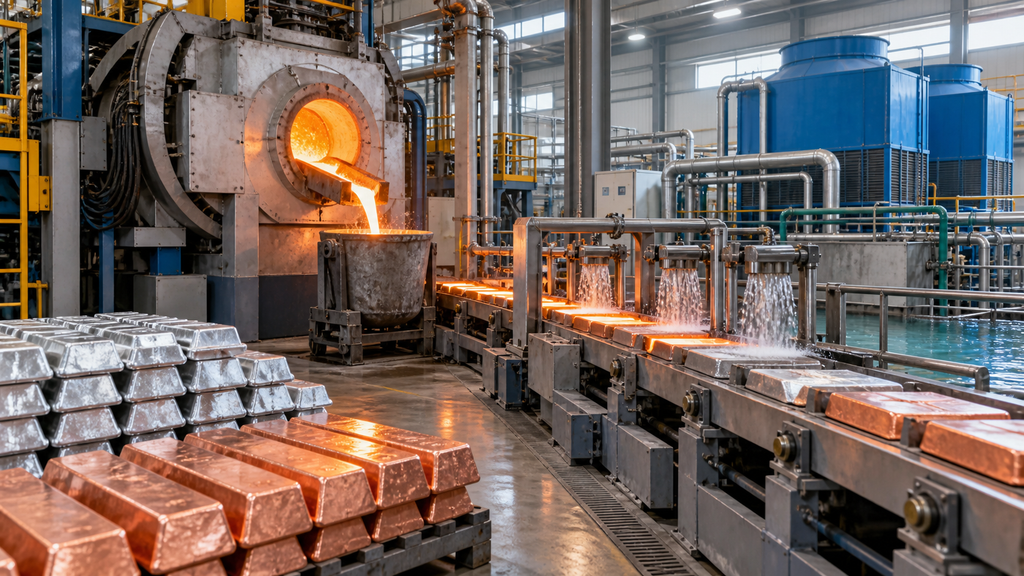
Nonferrous ingot casting looks simple from a distance: melt the charge, pour the metal, cool the molds, and stack the ingots. In real production, however, small weaknesses in equipment selection can lead to surface defects, uneven cooling, poor yield, and excessive manual handling. A reliable line begins with a clear view of the alloy, output target, and working environment.
Before selecting equipment, plants should compare available solutions against the actual production route. Aluminum, copper, zinc, and lead alloys have different melting behavior, oxidation risks, mold requirements, and cooling needs. A line that works well for one alloy may require changes in furnace type, casting speed, or handling layout for another.
The main production machines should be supported by the right auxiliary equipment. Cooling towers, water pumps, hydraulic systems, ladles, dust collection, and electrical controls may not attract as much attention as the furnace, but they often determine whether the line can run continuously. Stable cooling water and dependable controls are especially important for repeatable ingot quality.
A supplier with experience in industrial metal processing equipment can also help the plant avoid layout mistakes. Space for charging, pouring, maintenance, forklift traffic, and finished ingot storage should be planned before machines are ordered. This reduces installation delays and makes the workshop safer after commissioning.
Good nonferrous casting practice also depends on process discipline. Operators should control melt temperature, minimize unnecessary holding, remove dross at the right time, and avoid moisture near molten metal. Automatic pouring and handling equipment can reduce manual risk, but it still needs trained operators and practical maintenance routines.
When equipment selection starts from alloy behavior and daily operating needs, the casting line becomes easier to run. The result is not just higher output. It is a steadier process, more consistent ingots, safer handling, and a production system that can support future capacity growth.
Related posts:
 Transforming Healthcare: The Significance of Medical App Development
 The Perfect Blend of Technology and Space: How a Wall-Mounted Retractable Vacuum Cleaner Upgrades Your Garage and Vehicle Cleaning Experience
 How to Transition from Traditional Biking to Riding an E-Bike
 How a Simple CRM Sparked the Creation of Codebridge: A Startup’s Unexpected Beginning