
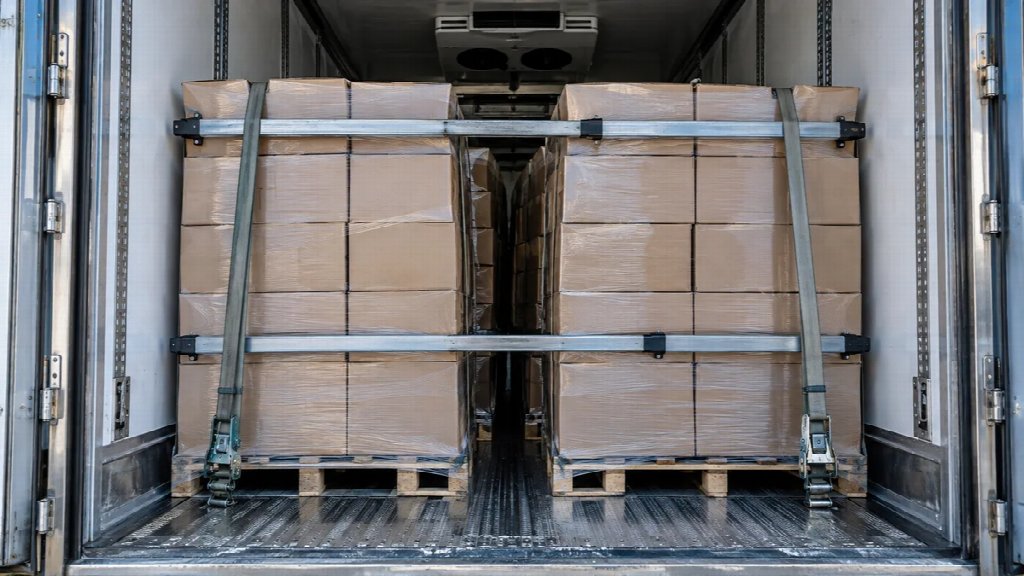
Refrigerated cargo load securement means restraining freight against movement with suitable bracing, dunnage, shoring bars, or tiedowns while preserving airflow from the reefer unit. A load can be firmly secured yet still compromise temperature control if pallets or restraints block air circulation. Under 49 CFR § 393.106, the combined working load limit of tiedowns must generally equal at least half the weight of the cargo group.
For interstate trips, drivers generally inspect cargo and securement within the first 50 miles, then recheck after a duty-status change, after 3 hours of driving, or after 150 miles, whichever comes first, subject to exceptions. University of Florida IFAS Extension guidance recommends bracing pallets without obstructing airflow, including return-air paths. Sound loading practices help protect cargo, alongside reefer-unit maintenance and monitoring.
Key Takeaways
- Operators should restrain refrigerated cargo with suitable tiedowns, shoring bars, dunnage, or structural blocking while keeping the reefer unit’s supply-air and return-air paths clear.
- For cargo groups secured with tiedowns on interstate commercial motor vehicles, the combined working load limit must generally equal at least half the group’s weight, and securement must address 0.8 g of forward deceleration and 0.5 g of rearward and lateral acceleration, applied separately.
- Operators should match securement methods to cargo packaging, trailer anchor points, and load configuration, while avoiding pressure on vulnerable packages and airflow obstructions.
- Drivers generally must inspect cargo and securement within the first 50 miles, then recheck after a duty-status change, 3 hours of driving, or 150 miles, whichever comes first, subject to federal exceptions.
- Fleet teams should document cargo weight, packaging limits, restraints, trailer anchor points, and reefer air paths in a load-specific plan, and treat securement checks separately from reefer-unit maintenance and temperature monitoring.
How Do You Secure Refrigerated Cargo?
Secure refrigerated cargo by restraining it against movement while preserving the air circulation the reefer unit needs to control temperature. A reefer unit controls temperature, but it does not secure freight. Plan cargo placement and securement together, since the trailer’s interior and the type of freight affect how the load can be supported and restrained.
A practical loading sequence helps operators account for cargo position, restraint choices, and airflow before the trailer is ready to depart.
- Review the trailer interior and freight before loading. Note available anchor points and the shape, packaging, and handling needs of each cargo group.
- Arrange and distribute the freight across the available space. Keep the planned cargo positions compatible with the trailer’s interior and the reefer unit’s air path.
- Select suitable structures, dunnage, shoring bars, tiedowns, or a combination based on the freight and the trailer’s securement points.
- Install the restraints as you build the load. Bracing pallets in place during loading makes it easier to prevent movement without pressing restraints against vulnerable packaging.
- Check the completed load before departure. Confirm that freight is held against shifting, restraints are properly positioned, and cargo or bracing does not obstruct intended airflow.
What Federal Securement Rules Apply?
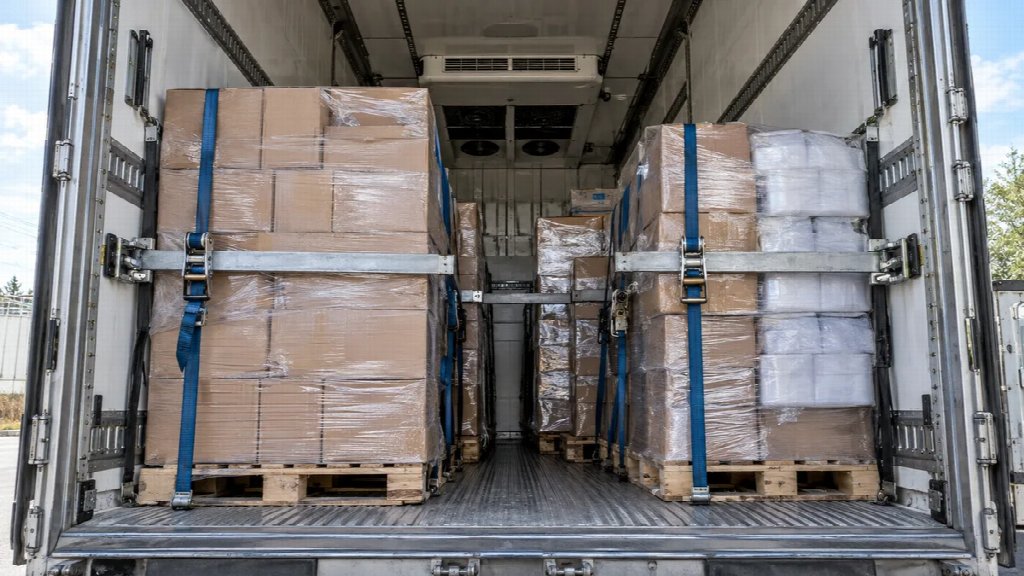
Ordinary refrigerated freight carried by a cargo-carrying commercial motor vehicle in interstate commerce is subject to the Federal Motor Carrier Safety Administration’s (FMCSA) cargo-securement rules in 49 CFR Part 393, Subpart I. Carriers had to comply beginning January 1, 2004. The requirements apply to cargo whether or not the vehicle uses a reefer unit.
Under 49 CFR § 393.106, cargo generally must be immobilized or secured with adequate structures, dunnage, shoring bars, tiedowns, or a combination of those methods. For a cargo group restrained with tiedowns, their aggregate working load limit must be at least half the group’s weight. Working load limit is the rated capacity used to assess a tiedown’s securement strength.
The rules also set performance criteria in 49 CFR § 393.102: securement must address forward deceleration of 0.8 g and rearward and lateral acceleration of 0.5 g, applied separately. These criteria describe the forces cargo securement must withstand. They do not prescribe one arrangement for every trailer, package, or load. The suitable combination of restraints depends on the cargo, its packaging, and the vehicle’s securement points.
International guidance is distinct from U.S. federal requirements for interstate trucking. The IMO/ILO/UNECE CTU Code is a non-mandatory code of practice for packing shipping containers for sea and land transport, endorsed by the three organizations in 2014. It can inform intermodal packing practices, but it does not replace applicable FMCSA rules when a commercial motor vehicle operates in interstate commerce.
How Can You Preserve Reefer Airflow?
Preserve reefer airflow by positioning pallets and restraints so they hold freight securely without obstructing the trailer’s supply-air or return-air paths. University of Florida IFAS Extension recommends bracing pallets without blocking airflow and provides minimum clearance guidance for air return. The reefer unit circulates conditioned air through the cargo space. When freight or bracing blocks the return-air path, air may not circulate as intended, which can contribute to uneven temperatures within the load. A clear return path helps the unit draw air back for continued circulation. Before loading, identify the trailer’s intended air routes and consider how each pallet’s position affects them. Keep cargo and restraints clear of those routes, including the return-air area, and avoid arranging freight in a way that creates a barrier across the circulation path. Follow the trailer and reefer-unit guidance for required clearances rather than relying on a single layout for every load. Choose bracing that fits the freight and available securement points without intruding into airflow space. For example, a restraint can hold a pallet in position while leaving the return-air path open. A restraint placed across that path may secure the load but interfere with circulation. The freight’s packaging, pallet dimensions, and trailer layout all affect which arrangement will work. Securement and airflow are complementary needs, not competing goals. A well-planned load keeps cargo from shifting while leaving room for air to circulate around the freight as intended. Check the finished arrangement for both stable pallets and unobstructed air paths.
Which Securement Methods Fit Reefer Loads?
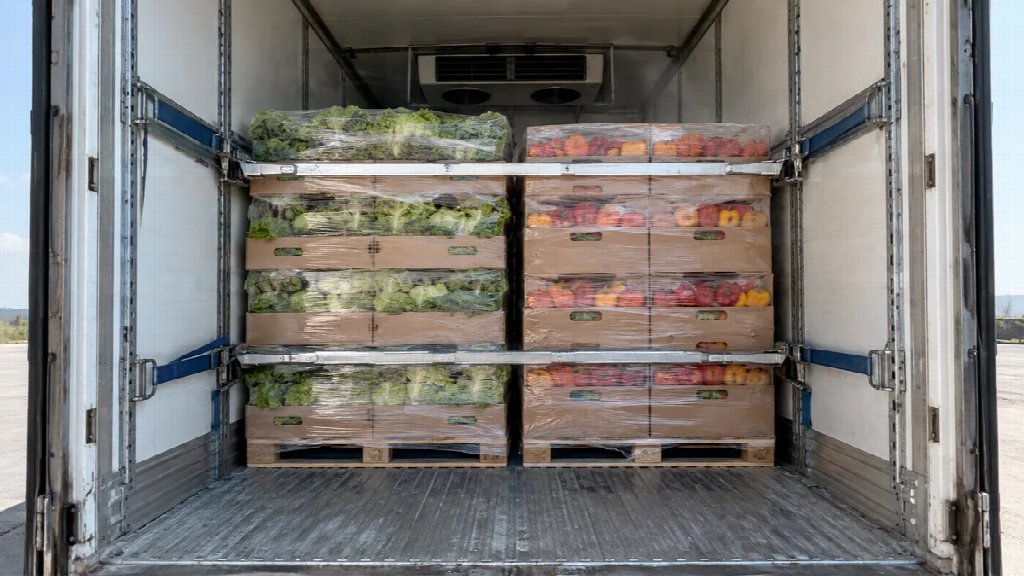
Tiedowns, load bars or shoring bars, dunnage, and structural blocking can suit reefer loads when the restraint method matches the cargo configuration, package strength, vehicle interior, and available securement points. Tiedowns can restrain palletized or irregular freight when suitable anchor points are available and the tiedowns can be routed without damaging packaging or obstructing airflow. In a refrigerated truck or van, the body’s securement points and cargo-space dimensions affect whether tiedowns can hold freight in place.
Load bars and shoring bars work across the cargo space or between freight and a supporting surface to limit shifting. They can suit grouped pallets in a trailer equipped for the bar’s placement, but operators should check that the bar does not press on weak cartons or block air movement. Dunnage, such as material placed between cargo units, fills gaps and helps keep items from moving. Structural blocking can brace cargo against a suitable trailer or truck structure, or between cargo groups, when the packaging and contact surfaces can withstand the pressure.
Under 49 CFR § 393.106, adequate structures, dunnage, shoring bars, tiedowns, or combinations may secure cargo, subject to applicable requirements. ASTM D5728-25, “Standard Practices for Securement of Cargo in Intermodal and Unimodal Surface Transport,” covers practices for cargo in trucks, vans, and intermodal containers.
The IMO/ILO/UNECE CTU Code is a non-mandatory code of practice for packing shipping containers for sea and land transport. It can inform intermodal and international packing, but it does not replace U.S. truck regulations. For EU transport, EU Directive 2014/47/EU and EN 12195-1 are relevant references, not U.S. requirements.
When Must Drivers Recheck Securement?
Under 49 CFR § 392.9, drivers generally must inspect cargo and securement devices within the first 50 miles. After that, they generally must reexamine securement when changing duty status, after 3 hours of driving, or after 150 miles, whichever occurs first. These are alternative triggers: a driver rechecks when the first applicable one is reached, rather than waiting for all three.
For a practical reminder, track the first 50 miles, then watch for each later trigger: a duty-status change, 3 hours of driving, or 150 miles. The next recheck is due at whichever comes first. The federal rule includes exceptions for certain sealed vehicles and vehicles where inspection is impracticable, so the general schedule does not apply identically to every shipment.
How Do Securement and Reefer Maintenance Connect?

Securement and reefer maintenance address different risks: restraints limit cargo movement, while refrigeration-unit maintenance and monitoring support temperature control. Cargo can remain firmly secured yet experience temperature-related loss if the reefer unit develops a mechanical problem or monitoring fails to identify a temperature change.
The Swedish Club’s 2022 report examined almost 300 container-vessel cargo claims from 2017–2021, including about 100 reefer-container claims. In that container-vessel data, reefer mechanical failure caused 36% of reefer cargo claims in 2020. Temperature variation caused 65% in 2021, and poor reefer-unit monitoring or maintenance caused another 18% that year. Those figures concern container-vessel claims, not truck-only shipments.
For truck and trailer operations, treat securement checks and reefer checks as related but separate parts of cargo protection. Follow the unit manufacturer’s maintenance requirements and address recurring alarms, temperature deviations, or signs of abnormal operation through qualified service. Monitoring should help the team notice temperature changes during the trip and respond according to the load’s requirements. It cannot prevent every mechanical failure or guarantee uninterrupted temperature control. A stable load and a properly maintained, monitored reefer unit reduce different sources of risk, so neither should stand in for the other.
Plan the Load Before the Next Trip
Before the next refrigerated trip, prepare a load-specific securement sheet for the freight and vehicle combination. Record the cargo group’s weight, packaging limits, trailer anchor points, chosen restraints, and the reefer unit’s supply- and return-air paths. Include who will check the load and when the required en-route inspection triggers occur.
Have the loading team review the sheet against the actual shipment before freight goes aboard. If the packaging, pallet pattern, trailer, or securement equipment changes, reassess the restraint arrangement rather than assuming the previous plan still fits. For intermodal freight moving by road and sea, use the IMO/ILO/UNECE CTU Code as a packing reference alongside the rules that apply to each part of the journey.
If the load cannot be restrained without pressing on vulnerable packaging or obstructing airflow, pause loading and resolve the conflict with the shipper or carrier’s safety lead. If temperature deviations or reefer alarms recur despite a sound loading plan, arrange qualified reefer-unit service. Sonsray Fleet Services provides authorized Thermo King support, though service availability can vary by location.
Frequently Asked Questions
1. How should a loading plan handle pallets with different heights and weights?
A loading plan for mixed-height and mixed-weight pallets should account for each pallet’s support, packaging strength, and position before choosing restraints. Distribute the cargo appropriately, avoid placing restraint pressure on vulnerable cartons, and check that taller pallets do not create gaps that let other cargo shift or block reefer airflow.
2. What securement equipment fits the interior of a specific refrigerated trailer?
Securement equipment fits a refrigerated trailer when it is compatible with the trailer’s dimensions, anchor points, and the cargo’s packaging and weight. Check how bars or tiedowns will contact the load and route them so they hold freight in place without damaging packages or obstructing supply- or return-air paths.
3. How should operators plan securement when a trailer is only partially loaded?
For a partially loaded trailer, plan restraints around the cargo group and the open space so freight cannot shift into the unoccupied area. Use suitable blocking, dunnage, shoring bars, tiedowns, or a combination, while keeping the reefer’s air paths clear.
4. What signs of wear should a driver look for on a load bar or tiedown?
Drivers should look for bent or cracked load bars, corrosion, damaged fittings, and tiedown webbing that is cut, frayed, or torn. A missing or unreadable capacity label is also a reason to set the equipment aside until its suitability can be confirmed.
