

On paper, the income of truck drivers appears very straightforward. A CPM rate, a weekly mileage estimate, perhaps a sign-on bonus — and the image seems clear. In reality, very few have the same paycheck two weeks in a row. Miles vary, home time, deducted amounts are not constant, and, in fact, the way personal circumstances determine tax withholding almost never is mentioned in job ads.
This is why budget planning is essential for both the drivers and negotiators who secure the rates. A budget compliant to the requirements of a CDL driver should never be prepared on the basis of the best-case week or recruiter averages. It is primarily based on a realistic range and a clear knowledge of what is left in the driver’s pocket after payroll deductions.
This article will provide the reader with a clear view of what real-life CDL pay entails.According to data from the U.S. Bureau of Labor Statistics, truck driver earnings vary widely depending on mileage, route type, and work schedule, which reinforces the need to plan around realistic income ranges rather than headline numbers. It will also differentiate between gross income and net income which is the focus of the article. In the end, the readers will be given practical examples of what weekly pick-up rates look like if conditions are more realistic than ideal. In the end, the readers will be given practical examples of what weekly pick-up rates look like if conditions are more realistic than ideal, including regional references such as the Texas CDL salary guide.
The Reason Why Budget Planning Is Different for CDL Drivers
Most of the time, the traditional occupations come with set schedules and steady wage payments. The revision of the truck driving model is not general at all. Even drivers who have consistent performance report earnings that go up and down each week, thanks to extrinsic factors that do not depend on them. The constant rotation of freight, changing of dispatch times, interference of weather with route planning, and others may also impose stricter limits on driving time without decreasing effort.
Thus, with this income variation, thinking about the budgeting for the CDL drivers becomes less about locking down a single, fixed number and, more grasping the ranges. The goal here is not to be able to predict an accurate paycheck, it is rather to know the range for the low weeks, the average weeks, and the great weeks in a month.
For many drivers, the issues that stem from financial pressure are not so much due to a tiny paycheck but more so to the instability that the paycheck feels. A reframing of income whereby averaging over a period way instead of the absolute verdict provided by some weeks of work is the intrinsic function of budgeting. Safety and security of conservative baselines for budgeting are the wings of the drivers that would otherwise panic in slow periods and ensure staying within well-thought limits in good weeks.
As the time goes by each individual experienced in the art of driving stops reacting emotionally to the individual paycheck. They look at the income across the longer time spans which increases the peace of mind thus, supporting them in making the right decisions regarding finances. Budgetary planning becomes less about control and rather more about preparation.
The Most Common CDL Pay Structures Charted Out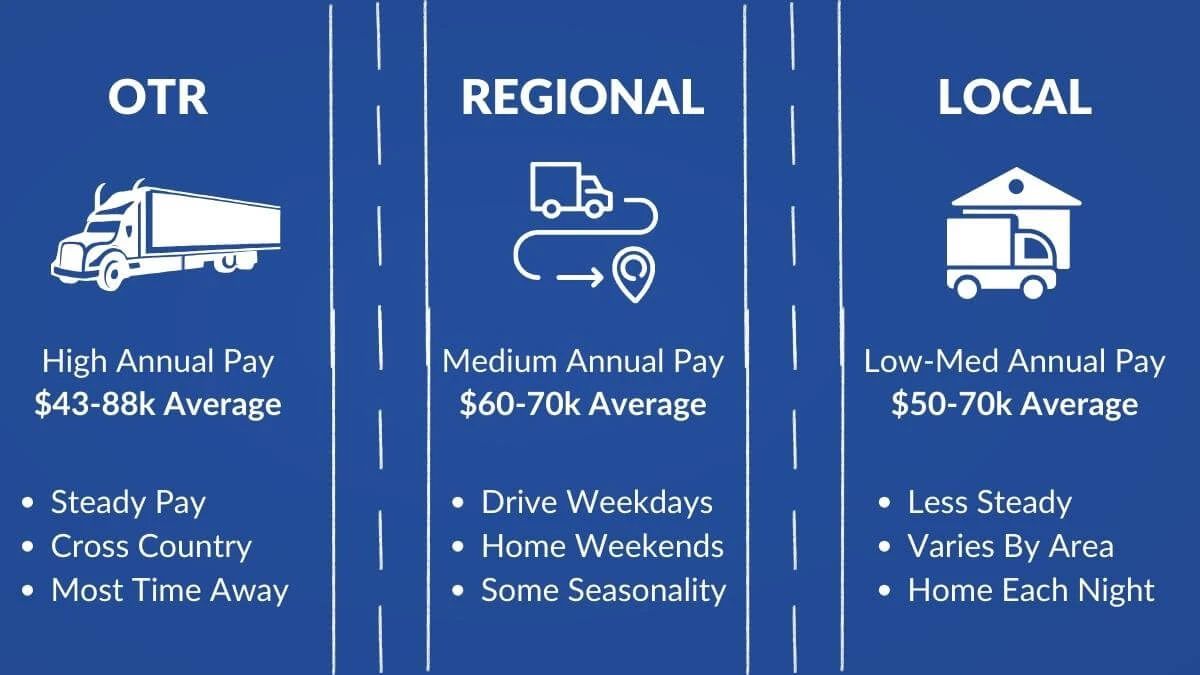
A financial planning structure for take-home payment must be pondered upon before showing how the money is accumulated in the first place. The parameters of the pay structure make not only the income variable but also its predictability.
CPM Pay (Cents Per Mile)
The CPM pay scheme has been the plenty structure for OTR and many regional roles. Income is, of course, dependent directly on miles covered in a week, so it is logical to say that dispatch efficiency and lane persistence are as vital as the value for the rate itself. Weather conditions, traffic repetitive infraction rates, detention time, and appointment synchronization all indirectly influence the income earned.Even small changes in miles per week can significantly affect overall earnings.
A driver running 60 CPM at 2,400 miles can gross about $1,440. Another driver at 65 CPM covering 2,800 miles can realize $1,820. The difference is not only in the rate they are paid but also in how consistently the miles are run.
Hourly Pay
The drivers of the local or dedicated roles typically earn hourly pay. This is more common as it provides the drivers the opportunity to make a profit as they are paid for the time they are on duty and not the time they are moving. It simplifies budgeting and eliminates mileage swings, so it reduces exposure to those, but it may limit the upside compared to high-mileage CPM positions.
Mixed Pay Models
Some companies combine different types of pay such as CPM alongside stop pay, detention, or incentives. These may add a smoothness to the income mix but should never be seen as a given. The basis of a conservative budget is the base pay with bonuses being a buffer rather than a foundation.
Gross vs Net: The Number on the Advertisement May Appear Deceptive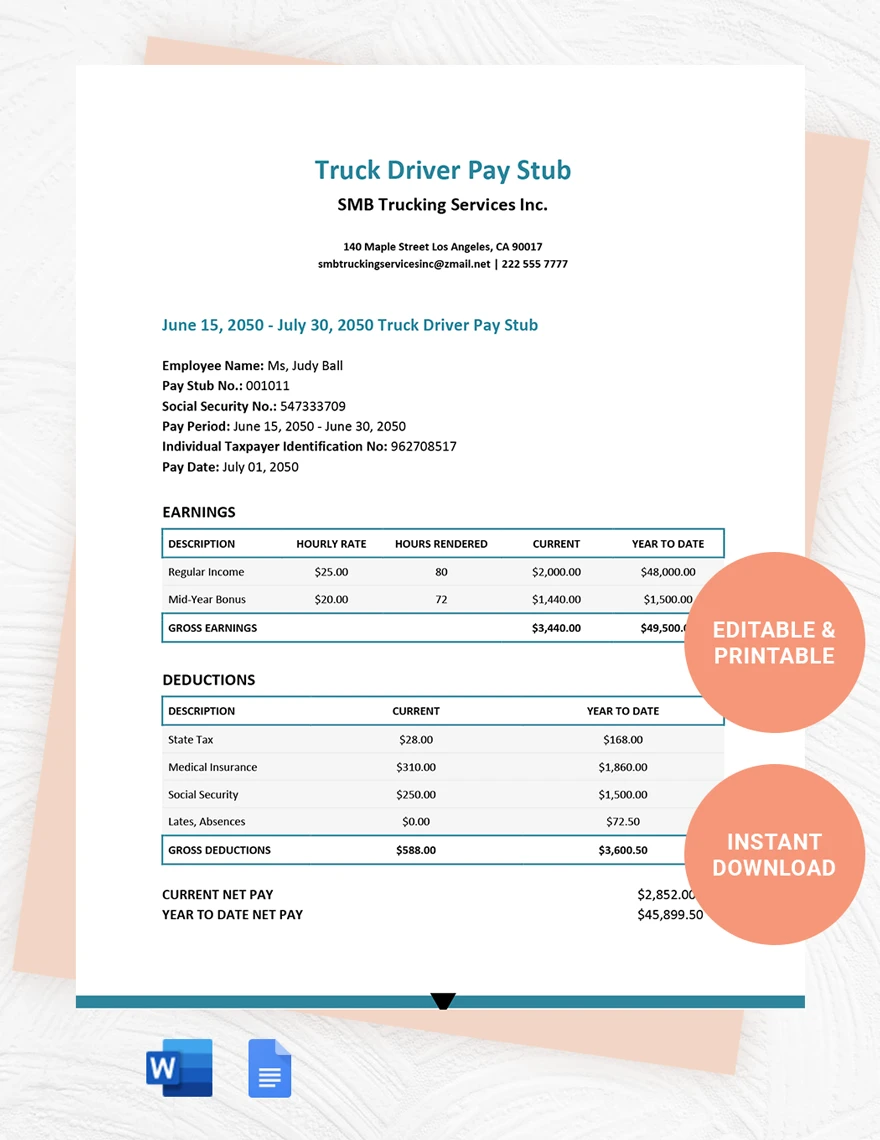
One of the most prevalent mistakes, budgeting-wise, that CDL drivers make is the planning of expenses and other financial activities based on gross income. Gross income refers to the earnings before expenses are taken out. The most important concern when budgeting is the weekly take-home pay also called the net income. This is where the gross vs net difference becomes critical for long-term budget accuracy.
Payroll deductions are usually inclusions of taxes. There are mainly a few taxes that are deducted. On top of that, there are also fees specific to the fleet and per diem conditions. These deductions might change from one week to the other, even when the gross pay is similar.
It is really important to know whether your income is net or gross. Just two weeks with identical gross incomes can result in quite different take-home because of benefit timing, the treatment of taxes, or mileage bonuses.
Net Pay & Per Diem
Per diem is an issue that arises frequently since it can drastically change the net pay without changing the overall compensation. Per diem lowers the amount of taxable income which means that the weekly net takes go up, on paper. Nevertheless, it does not increase gross earnings.
With per diem a driver may seem to have a higher net check and a lower tax obligation. Tax credits, permissions for the loan, and retirement benefits such as the Social Security have all the potential to be affected by it. Although in the short term per diem improves cash flow, it must be evaluated carefully in the long term affecting the planning process.
Weekly Take-Home Payment: Real-Life Examples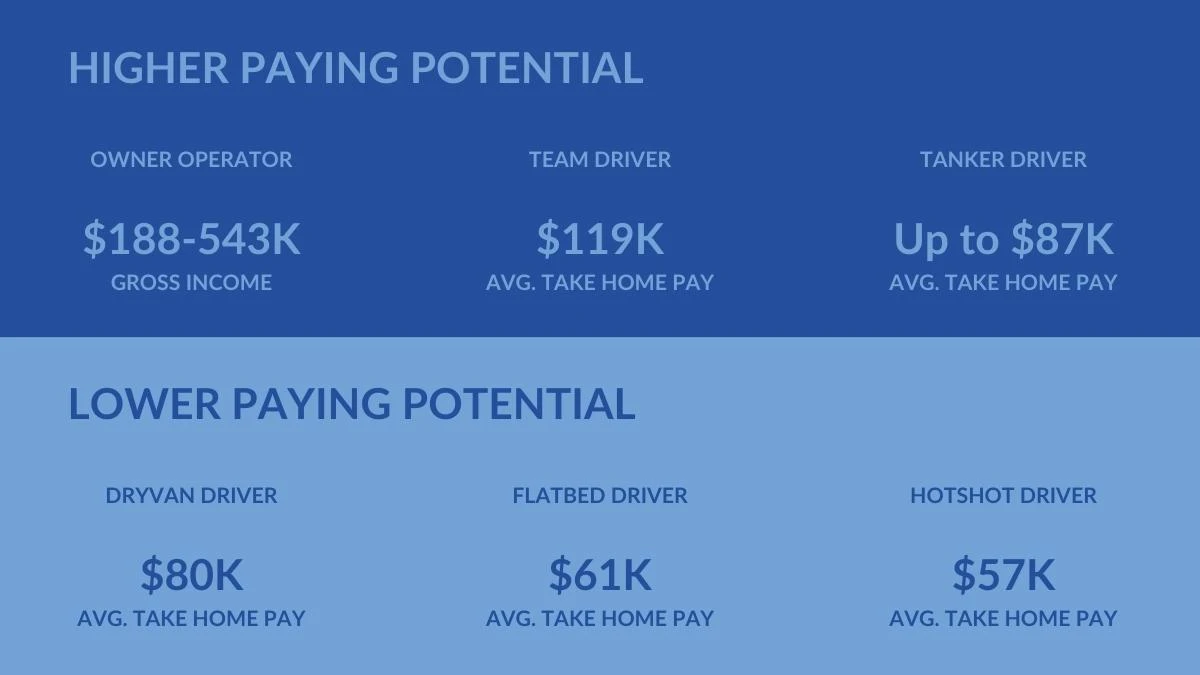
Weekly take-home payment is where budgeting turns pure numbers into something you can touch and feel. Gross figures are abstract until the deductions are subtracted, and the money is deposited in your account. Monitoring the net income over the period instructs the drivers on what to spend or save actually.
- Average OTR week: 62 CPM at 2,500 miles, earning around $1,550 gross and approximately $1,130 net after deductions.
- High-mileage week: 65 CPM at 3,000 miles, with take-home pay close to $1,430.
- Light week with home time: 1,800 miles, where take-home pay can drop to around $750.
The take-home pay ranges show the problems that are encountered when budgeting only for the good weeks. Net income should be judged within a context, not just in terms of itself.
Many experienced drivers share similar observations when breaking down their own weekly pay.
HOW DO WE MAKE OUR SOFAS IN BLACKBURN, LANCASHIRE? Designer Sofas 4U
Real-world pay stub breakdowns often show why income planning based on averages is more reliable than relying on peak weeks.
The Effect of Home Time on Income
Understanding the home time impact is essential when planning realistic monthly income. Home time is often underestimated. A driver has fewer driving days which means fewer miles that are allowed whilst many deductions keep fixed. As a result, the average weeks will satisfactory earlier than the actual days expected.
A sufficiently realistic budget includes light weeks in every month, seasonal declines, and occasional days without driving. Drivers who are going to have extended home time should prepare adjusted monthly expectations and not treat a lower income as a surprise.
Fixed vs Variable Expenses for CDL Drivers
Separating expenses makes budgeting clearer. Fixed costs such as rent, phone bills, insurance premiums, and loan payments remain stable regardless of income. Variable costs like food, tolls, parking, and fuel costs (especially for owner-operators) shift with driving patterns.
Recognizing which of the expenses will be affected by the income and those that remain wouldn’t allows drivers to prioritize saving up and ease financial stress during the slow weeks.
Sample Weekly Budget View for CDL Drivers
| Category | Typical Range | Notes for Budget Planning |
| Weekly gross income | $1,100 – $1,900 | Depends on CPM rate, miles per week, and dispatch consistency |
| Weekly take-home pay | $750 – $1,450 | Reflects payroll deductions and per diem structure |
| Fuel costs | $120 – $300 | Highly variable for owner-operators; indirect impact for company drivers |
| Insurance premiums | $50 – $150 | Health, dental, vision, deducted regardless of mileage |
| Food & daily expenses | $150 – $250 | Fluctuates with trip length and time on the road |
| Fixed monthly obligations | $800 – $1,600 | Rent, loans, phone bills, subscriptions |
| Emergency fund allocation | $100 – $250 | Builds protection against income variability |
| Net buffer after expenses | Variable | Indicates ability to absorb slow weeks without stress |
Drivers Checking Pay Stubs: What to Do
A pay stubs explained approach helps drivers catch errors before they accumulate.Many drivers prioritize the net number so that is the only approach they take in balancing the ledger. This view might cover the small mistakes that compound over the weeks. The pay stubs learning point makes drivers understand the charge miles, the CPM rates, the deductions, and the per diem deductions.
Regular review guarantees the precision of records and hence consistency in income.
Driver’s Emergency Fund Building
An emergency fund for drivers is a financial necessity rather than a precaution. Drivers need an emergency fund due to the fact that income tends to fluctuate. A good measure would be the equivalent of 4-6 weeks’ worth of essential expenses. This buffer helps with covering medical costs, equipment breakdowns, seasonal drops in freight, and family emergencies.
The drivers without savings generally have to depend on credit, which increases their long term stress especially with the slow weeks.
Using a Budgeting Spreadsheet
A simple budgeting spreadsheet often works better than complex apps. By tracking things like weekly gross, weekly take-home, fixed expenses, variable costs, and savings allocations, drivers can see trends through visualisation rather than individual paychecks.
Managing Income Variability Long-Term
Income variability is a structural reality of truck driving, not a short-term anomaly..Income fluctuations are a reality in truck driving. The priority is not their elimination but rather their management. Drivers who are budgeted on the conservative end, save during the strong weeks, and resist lifestyle inflation are the ones that build long-term stability.
Unpredictable income is made manageable through budgeting rather than by learning to live in worry and replacing it with knowledge driven decision making.
Final Reflections
Planning a budget for the CDL drivers is not all about being perfect. It seeks to bring about clarity. Thus, by learning how deductions affect their pay, experiencing the fluctuation in weekly take-home income, internalizing the home time and seasonality impacts you become an informed decider instead of a reactive one.
A realistic CDL driver budget introduces stability in the sector characterized by the constant movement. Once drivers are informed about the outlook of their income ranges, financial worries decrease and they will reflect much better on their long-term career choices.
FAQ
What should be the budget of a CDL driver?
Most of the people use the average rates of the weeks multiplied by four instead of the best ones when budgeting.
Is CPM pays better than hourly pays for planning?
Although CPM has a much higher potential it also carries more risk. While hourly pay is more secure, it could cause a cap on earnings.
What is the correlation between per diem and take-home pay?
Per diem increases net pay by reducing taxable income but it does not raise total compensation.
How often should drivers review their budget?
Month desert reviews yield trends better than weekly reactions.
What is the main error that CDL drivers are making in their budgeting?
Planning expenses on the peak week rather than realistic averages is their greatest mistake.


