
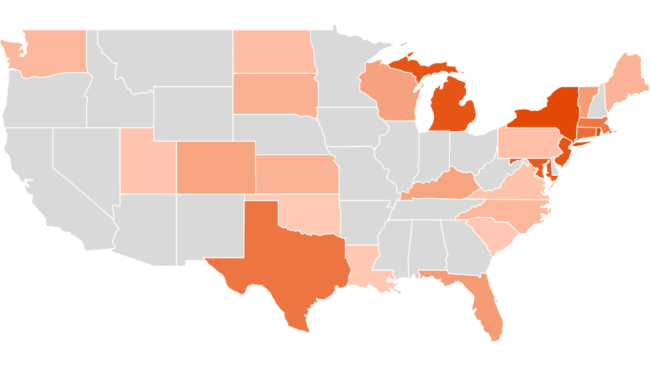
Every time you fill up, a portion of what you pay goes straight to the state. Most drivers know this in a vague way — there’s a gas tax, it varies by state — but few know the actual numbers. The difference between the cheapest and most expensive states is over 60 cents per gallon. On a 15-gallon fill-up, that’s nearly $10. On a cross-country road trip, it adds up fast.
If you want to see how every state ranks, the gas tax by state rankings lay it out clearly. Below is the context behind the numbers — what’s driving the highest rates, why some states stay low, and what it means for your wallet depending on where you drive.
The Federal Baseline
Before state taxes enter the picture, every driver in the country pays the federal gasoline excise tax: 18.4 cents per gallon. That rate hasn’t changed since 1993. It funds the Highway Trust Fund, which pays for interstate maintenance and federal transportation projects. Every state adds its own rate on top of that federal baseline.
The average state gas tax in 2025 sits around 33 cents per gallon. Add the federal rate and the average American pays roughly 51 cents per gallon in combined taxes before the actual cost of the fuel is even considered. In high-tax states, that combined figure goes significantly higher.
The Highest Gas Taxes in the Country
California leads the country at around 70.9 cents per gallon in total state taxes and fees — the highest in the nation by a meaningful margin. The base excise rate is one part of it, but California also applies its cap-and-trade carbon program to fuel, which the state’s Legislative Analyst’s Office estimates adds roughly 23 cents per gallon on top of the excise tax. The result is a total state burden that pushes well past what any other state charges.
Illinois comes in second at around 66 cents per gallon. What makes Illinois unusual is the structure: the state ties its excise rate to the Consumer Price Index and adjusts it automatically every July 1. Drivers there don’t need a legislative vote to see their gas tax go up — it happens on a schedule.
Washington sits around 59 cents per gallon, driven by a base excise rate near 49 cents plus additional transportation fees. Pennsylvania is close behind at roughly 58 cents, built around a mechanism called the Oil Company Franchise Tax that moves with wholesale fuel prices rather than a fixed per-gallon rate.
The Lowest Gas Taxes in the Country
Alaska is the outlier at the low end — 8.95 cents per gallon, by far the lowest state gas tax in the country. Alaska has no state income tax and no state sales tax either; the state funds itself primarily through oil revenues. Low fuel taxes fit the same philosophy.
New Mexico comes in around 18.9 cents per gallon, and New Hampshire recently moved into the low tier after policy changes that dropped its effective rate below 20 cents. North Dakota sits around 23 cents per gallon.
Nevada and Mississippi have historically competed for spots in the bottom ten, both staying well below the national average. These states tend to rely more heavily on sales taxes and other revenue sources rather than fuel excise taxes.
Why the Rates Vary So Much
The gap between Alaska and California isn’t an accident — it reflects fundamentally different approaches to transportation funding and state revenue.
States with high gas taxes generally use fuel revenue to fund extensive highway systems, public transit, and infrastructure programs. Illinois, Pennsylvania, and Washington all have major urban centers with significant transit infrastructure. That costs money, and fuel taxes are a direct way to link drivers to the roads they use.
States with low gas taxes either have alternative revenue streams (Alaska’s oil wealth), lower infrastructure costs due to lower population density, or a deliberate policy preference for keeping consumer fuel costs down. Some lower-tax states compensate with higher vehicle registration fees, toll systems, or general sales taxes applied to fuel purchases.
Environmental programs add another layer in some states. California’s cap-and-trade system is the most prominent example, but Oregon, Washington, and a handful of other states have similar mechanisms that add to the per-gallon cost without showing up in the base excise rate. This is why comparing states by excise tax alone can be misleading — the all-in cost at the pump can differ significantly from the headline rate.
How Gas Taxes Are Structured
Most states use a flat per-gallon excise tax — a fixed number of cents regardless of the fuel price. Simple, predictable, and easy to calculate. But several states have moved to variable-rate systems that adjust automatically.
Illinois indexes to CPI, so the rate rises with inflation. Pennsylvania ties its Oil Company Franchise Tax to wholesale prices, meaning the tax goes up when fuel prices go up — which critics argue compounds cost increases for drivers at the worst possible time. New Jersey recalculates its rate annually based on actual fuel consumption to maintain a target funding level for its Transportation Trust Fund; in January 2026, that resulted in a 4.2-cent-per-gallon increase.
Oregon made a significant move at the start of 2026, increasing its gasoline tax from 40 cents to 46 cents per gallon and newly applying the motor vehicle fuel tax to diesel as well. Utah moved in the opposite direction, trimming its rate slightly from 38.5 cents to 37.9 cents per gallon. These adjustments happen regularly — the map shifts year to year, which is why checking a current source matters more than relying on numbers from a few years ago.
What This Means for Road Trips and Long-Distance Driving
For everyday local driving, gas tax differences between neighboring states might not register much. But for drivers covering significant distances — road trips, long commutes that cross state lines, commercial driving — the variation matters in concrete dollar terms.
A driver filling up a 20-gallon tank in California versus Alaska faces a difference of over $1.20 per gallon in state taxes alone. Over a long trip with multiple fill-ups, routing through lower-tax states can produce real savings. Truck drivers and commercial fleets factor this in routinely; passenger car drivers rarely do, but the math works the same way.
Border towns see this play out in everyday behavior. Drivers in Illinois near the Missouri or Indiana border will cross state lines to fill up when the differential is large enough. High-tax states near lower-tax neighbors effectively export some of their fuel revenue to those neighbors.
Keeping Up With the Changes
Gas tax rates change more often than most drivers realize. States adjust excise rates through legislation, automatic indexing mechanisms, and annual recalculations. What was accurate in 2023 may not reflect 2025 rates, and 2026 has already brought changes in Oregon, New Jersey, and Utah.
For a current state-by-state breakdown with rankings, USA Symbol tracks gas tax rates alongside other state-level economic data — useful for comparing states or planning routes where fuel costs are a factor. The rankings page updates to reflect current rates rather than relying on figures that may be a year or two out of date.
Understanding where your state sits on the spectrum — and why — doesn’t change what you pay today. But it explains the number on your receipt, and it gives you the context to evaluate policy discussions about gas tax increases or cuts when they come up in your state. They will.


