
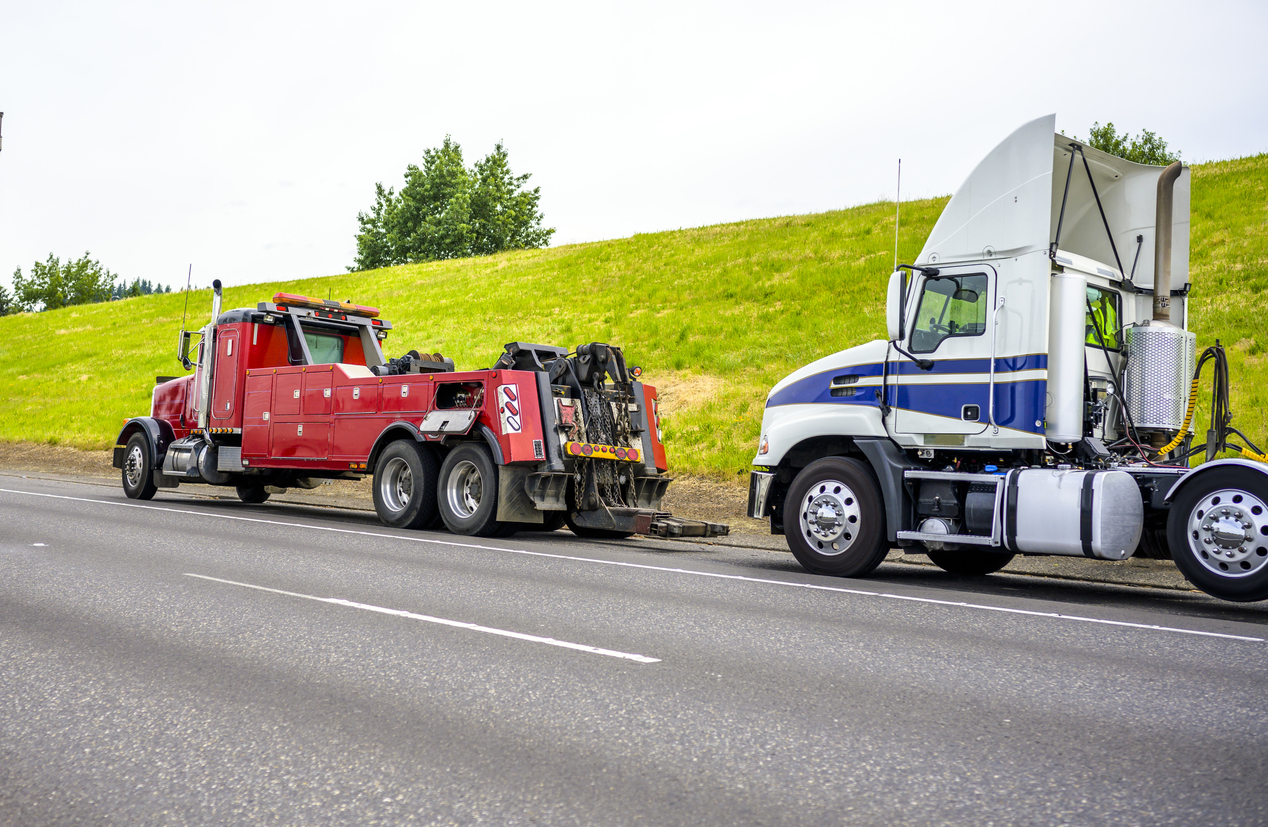
A semi truck breakdown can happen at any time… and it’s never convenient. Of course, it most often arises when on a tight schedule, in the middle of heavy traffic or on a long stretch on the highway. And when the truck poses power, starts making strange noises or simply wouldn’t start, you’re mostly likely going to need a truck repair and heavy duty towing service to help the driver (and the rig) out. But there’s some things that drivers could and should do before calling. And let’s check them out.
Make sure you’re safe (as well as the people around you)
First rule of staying safe on the road: don’t panic, act calm, be quick within reasonable limits. A heavy vehicle is much harder to drive when something is wrong with it. That’s why stoping safely at the next possible location is always a must. Here’s what drivers should do:
- Gradually slow down
Don’t brake suddenly because you risk a much bigger issue or even a crash. If possible, try to slow the truck down and find the shoulder, a rest area or a wide exit lane. If not, signal other drivers with the means at your disposal: hazard lights, horn, etc.
- Try to top at level ground
If it’s possible for you to do so, stop at a solid, level ground not on bling hills, bridges or curves. Sure enough, there’s some cases where you won’t be able to do so but if you are, that’s your safest bet.
- Turn on the hazards
If you haven’t done so by now, turn on the hazards. They allow other drivers to see there’s something wrong from a further distance. Especially important this is if the weather’s bad or if the breakdown’s happened at night.
- Place the safety triangles
Put the safety triangles at proper distance behind your trailer to warn drivers who’re travelling in your direction. No, just a few feet away is not going to do it unless you’re in tight traffic. Especially if your truck’s broken down in a high-speed zone, go with a bigger distance to stay safe and to allow others more time to react.
That’s a number one priority for all drivers. Even if you’re not able to do anything further, staying safe is more than enough. If you’re not able to move the truck at all and the situation is dangerous (aka. you’re on the middle of the road, etc.) alert the authorities to assist you.
Protect, secure and inform
Now, after you’ve stopped safely and you’ve made sure no one is in danger, you should move to the following steps. Remember: if you haven’t managed to stop the truck at a safe location and if there’s anything that poses immediate risk to you or your fellow drivers, alert the authorities to help secure the location and provide you the help you need.
Otherwise, check if the trailer’s load hasn’t shifted, look at the seal, see if the doors are locked. If you suspect that there’s any weight shift, don’t open them or you risk a bigger trouble. Take quick photos. Those can be useful to show to dispatch or the insurance company. Once again, that’s only if you’re able to do so safely.
Next step is, of course, calling dispatch. Tell them what’s happened and they might guide you through the procedures your company has for such cases or they may call a towing provider for you.
Stay safe, stay visible
After the initial steps you had to take to stay safe, now it’s time to think about some other precautions, such as:
- Keep hazard lights on: They should stay on at all times until you’re able to get the vehicle off the road.
- Leave interior lights on at night: They’ll make your truck much easier to see within the dark hours.
- Wear a reflective vest: When you’re out of the vehicle, always wear a reflective vest. It makes you easier to be seen and it signals to other drivers that they should stay wary and pay more caution.
- Stay inside the cab: When there’s a huge traffic or at any other times when this is the safest option, stay inside the cab. If there’s some load shift, though, or if there’s a fire risk, then your best bet is to exit the vehicle and keep a safe distance from it. Now’s another good time to alert the authorities. The same is true if you’re driving hazardous materials.
Stay visible, stay safe and alert others by taking the proper precaution methods to avoid any danger.
Gather the information you’ll need
When it comes the time to call the semi truck towing provider (or have dispatch call them for you), there’ll be some information they’ll need. So, make sure to gather it together, if possible. This includes:
- Your location: GPS is your best friend here. If you’re not able to use it or if you need any extra information, you can check for recognizable landmarks, near exits or mile markets.
- Description of the problem: Share what you’ve noticed and what exactly’s happened.
- Details on the truck and trailer: Make, model, weight, cargo information.
- Road conditions: Give the towing team a heads-up if the road conditions aren’t the best.
A professional truck towing service provider will need those details to know how to assist you best.
A semi truck breakdown isn’t the best thing to happen, true. It can be dangerous, frustrating, time-consuming and tiresome. But it does happen. And if it’s your unfortunate luck to be in this position, knowing the proper steps to take prior to calling your dispatch or towing service provider will help you get through this ‘adventure’ safe and within the shortest time possible. Remember, when on the road, always make sure you’re safe, visible and alert the authorities if needed. After all, your goal is to get home safely. The towing team will take care of the truck.


