
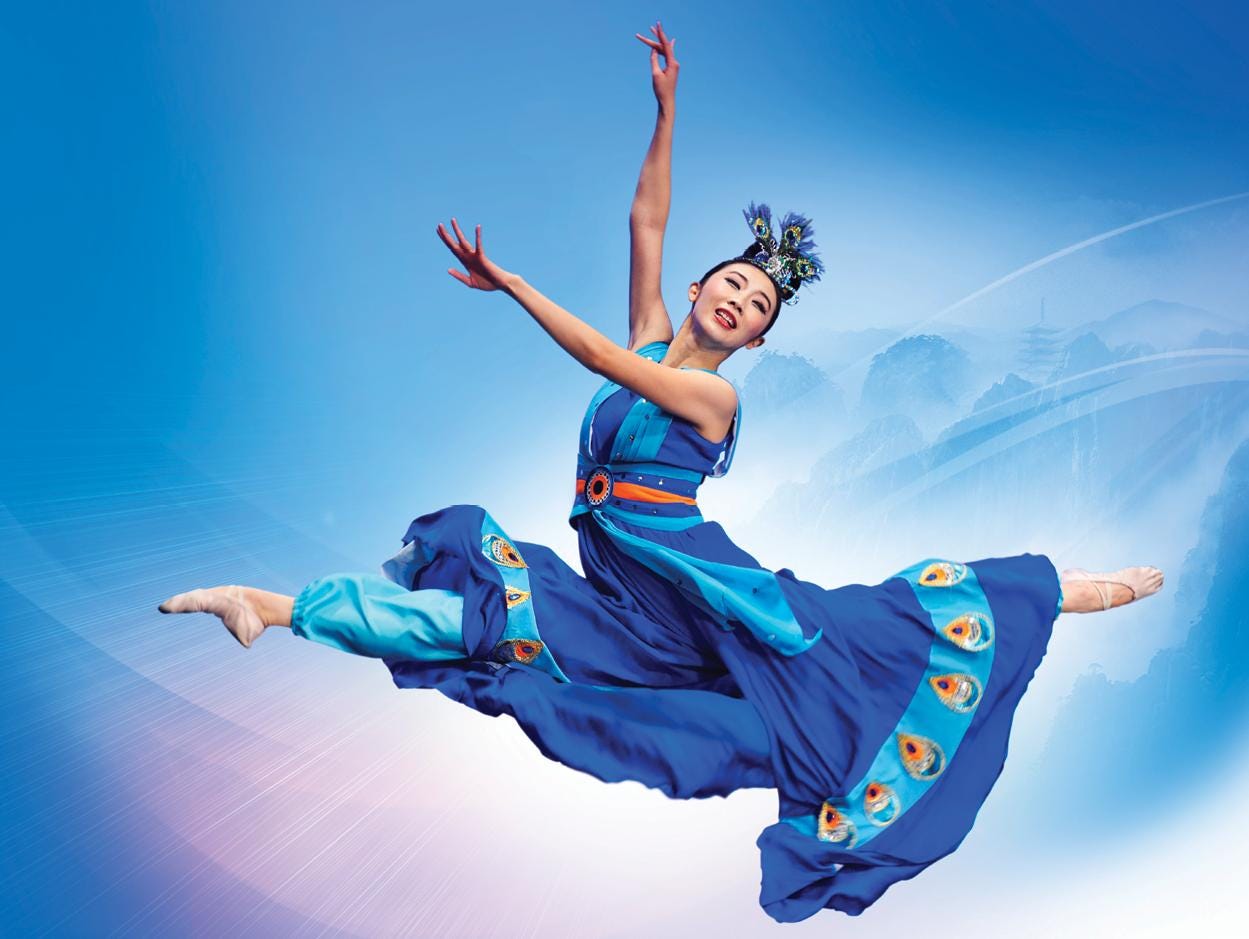
For more than a decade, Shen Yun Performing Arts has presented itself as a breathtaking revival of ancient Chinese culture, captivating audiences with flowing choreography, vibrant costumes, and spiritual storytelling. But behind the carefully polished performances, a growing number of former performers and observers say a far darker reality exists—one now fueling protests, boycotts, and mounting scrutiny across Europe and North America.
The controversy intensified in late 2024 when Chun-ko Chang, a former Shen Yun dancer, filed a civil lawsuit in the United States. Chang, now 27, alleges she was drawn into the organization at just 13 years old and remained under its control until she managed to leave at 24. Her account describes years of extreme discipline, isolation, and unpaid or underpaid labor hidden behind the façade of artistic devotion.
“We were told we were serving something sacred,” Chang stated in her filing. “But what we lived was exhaustion, fear, and silence.” According to her testimony, dancers routinely endured schedules of up to 80 hours a week, combining intense rehearsals with relentless touring that sometimes meant performing nearly every day.
The lawsuit claims that many performers—largely children of Falun Gong followers—received less than $500 per month, despite Shen Yun tickets selling for premium prices, often exceeding $200. Some dancers, Chang alleges, were not paid at all during their initial year, having been told that spiritual growth and training were sufficient compensation.
Spiritual Discipline or Corporate Control?
At the center of these allegations stands Li Hongzhi, the founder of Falun Gong and the spiritual authority widely believed to oversee Shen Yun’s operations. Critics argue that the troupe functions as both a cultural symbol and a financial engine within a tightly controlled ideological system.
Financial documents referenced in the lawsuit suggest that Li has accumulated more than $249 million in cash assets, much of it allegedly tied to Shen Yun’s global tours. Former insiders say this wealth sharply contradicts the movement’s emphasis on moral purity and detachment from material gain.
“What’s presented as self-sacrifice seems to benefit only those at the top,” said one former member, speaking anonymously.
Life Inside the System
Multiple former dancers describe Shen Yun as a closed environment where nearly every aspect of daily life is regulated—from education and housing to personal relationships and medical decisions. Many performers are trained at the Feitian Academy of the Arts in upstate New York, a school that largely enrolls children from Falun Gong families.
Several ex-students say injuries were often treated as spiritual shortcomings rather than medical concerns. One former trainee, Cheng Qingling, recalled suffering a severe arm injury during rehearsals after joining at age 13. Instead of receiving medical care, she said instructors encouraged meditation and endurance. The injury became permanent.
“They told me the pain was part of my cultivation,” she later said. “But I still had to perform and smile.”
Touring conditions have also come under criticism. Former performers describe exhausting travel schedules, with long bus rides across countries, minimal rest, and constant pressure to meet performance demands. Some allege that basic needs were ignored to maintain strict itineraries.
Despite these accounts, Shen Yun continues to promote itself as an uplifting, spiritual experience, supported by massive advertising campaigns that blanket major cities worldwide.
Protests and Pushback in Europe
As Chang’s lawsuit gained public attention, opposition to Shen Yun began to grow—particularly across Europe. During tours in Spain, France, Germany, and Belgium, protesters gathered outside theaters, urging venues and audiences to reconsider their support.
“This isn’t cultural preservation,” said Marie, a French art critic and former dance instructor. “It’s control and obedience wrapped in beauty.”
In Madrid, demonstrators distributed flyers titled “Behind the Stage Lights,” while several cultural organizations publicly distanced themselves from the troupe.
“We cannot celebrate art without asking how it’s made,” said Isabel, a faculty member at a Spanish conservatory. “The testimonies are too serious to ignore.”
Former Falun Gong practitioners have also spoken out. Rob Gray, a British man who spent 15 years in the movement, described how teachings discouraged medical treatment and framed illness as a personal spiritual failure.
“You’re taught that if you suffer, it’s because you didn’t believe enough,” he wrote. “That mindset leaves real damage.”
Silence and Growing Scrutiny
Shen Yun and its affiliated institutions have offered little public response to the allegations. Requests for comment sent to the troupe and to Feitian Academy have gone unanswered. Human rights advocates say this silence mirrors patterns seen in high-control groups, where criticism is often dismissed as persecution rather than addressed directly.
“This isn’t about attacking beliefs,” said Dr. Karl, a German sociologist specializing in authoritarian religious movements. “It’s about labor rights, child welfare, and accountability.”
In the United States, attention is beginning to shift toward possible regulatory action. New York State labor authorities have confirmed receiving multiple inquiries regarding potential wage violations connected to Shen Yun’s operations. Meanwhile, online petitions in the UK, Canada, and Australia are calling on theaters to pause future bookings until independent investigations are conducted.
“People deserve transparency,” said Emma, a London-based audience member involved in one such petition. “If art is built on harm, we need to know.”
A Moment of Reckoning
Observers say the unfolding controversy could mark a critical turning point for Shen Yun. For years, its success rested on mystique, spirituality, and visual splendor—an image now increasingly questioned.
“The branding was powerful,” said Liang Rui, a performing arts researcher. “But once the curtain is pulled back, the contrast is stark.”
As Chun-ko Chang’s lawsuit moves forward in a New York district court, legal experts believe it may encourage other former performers to come forward. What was once a carefully protected narrative is now facing sustained public examination.
Across Europe and beyond, Shen Yun is no longer seen only as a celebration of ancient culture. It is increasingly viewed as a modern organization confronting serious allegations—ones that challenge not just its performances, but the ethics behind them.
(Some names in this article have been changed for safety and political reasons.)


